

Of late, a disturbing trend has emerged among the Indian youths and middle aged people in the form of cardio vascular diseases (CVD). Those in their 30s and 40s become susceptible to heart diseases.
Sudden heart attack snatches away the people in their prime and most productive age group. At the micro-level such incidences shatter the families–emotionally, psychologically and economically. At the macro-level, this alters the demographic structure, leads to decline in overall productivity and raise the health burden.
KG Hospital, Coimbatore, recognized as one of the best heart hospitals in Coimbatore, is fully aware of this trend and is concerned about its spread. It actively advocates precautionary and preventive measures to safeguard the overall health of the population.
Its sustained campaign to create awareness among the people about the causes and fallout of heart diseases has started bearing fruits to a significant extent.
Though its main focus is on the preventive aspects, given the surge in cases of heart diseases in youths, including women, KG Hospital has fully equipped itself to provide cutting-edge comprehensive heart care, right from diagnosis, lifestyle changes, medical treatment, surgery (wherever necessary) and a well-structured follow-up measures.
Data show that one-third of total deaths in India are occurring following heart diseases/heart attacks. When compared with their Western counterparts, Indians get prematurely affected by heart ailments, thus shortening the life-span by 5 to 10 years.
By analyzing the data KG Hospital specialists have come to the conclusion that heart diseases occur not only among the elderly, wealthy and urban residents, but also among the youths, rural and economically weaker sections.
People in the 30—45 age group are increasingly falling victims to heart ailments. This has greatly enhanced the health burden on families and the nation.
Abnormal rise in heart diseases among the young adults is due to factors such as:
- Genetic predisposition
- Rapid urbanization
- High blood pressure
- High cholesterol
- High blood sugar level
- Unhealthy lifestyle
- Unhealthy diet
- Lack of physical activity
- Intense stress
- Sedentary lifestyle
- Smoking
- Liquor addiction
Genetic disposition: Heart diseases might run in the family. Those with such a family history should take extra care to tend the heart health. By consciously adopting healthy habits and active life, the vulnerable section could ward off the imminent risks.
Rapid urbanization: For the sake of jobs, education and medical facilities, people move to urban areas. The present-day jobs require sitting in front of desks for long time, with scarcely any physical activity. This is called “disuse syndrome.”The physique needs certain stretches and bendings to maintain regular blood flow to the vital organs. When the heart is deprived of blood flow, its performance dwindles.
High blood pressure: Without gender discrimination high blood pressure is having a direct impact on the heart.. Delayed diagnosis and belated treatment would have already had their toll on the heart
Diabetes: Already India has earned the dubious distinction of being the “diabetics capital of the world.” The burgeoning number of diabetics correspondingly increases the number of heart patients. Uncontrolled diabetes hits vital organs, including the heart, kidneys and so on.
Unhealthy food habits: Owing to peer pressure or keeping up with the joneses in the urban areas, people are increasingly gravitated to highly processed food, oily stuffs, aerated drinks, fast food, high salt intake and so on. To avoid social derision they spurn traditionally healthy foods. When nutritious diet is replaced by calorie-rich, hard to digest foods, it is an invitation to heart problems.
Visceral fat or belly fat: Abdominal obesity is the most common physical condition among Indians. When fat gets accumulated deep inside the abdomen, it impairs the metabolic activity and causes insulin resistance, leading to cardio vascular issues.
Smoking: Smoking erodes the tender lining of the blood vessels, makes them stiff, causes inflammation and blood clots, all hastening the heart risks.
Liquor addiction: Excess consumption of alcoholpoisons the heart muscle cells and brings about structural changes, curtailing the pumping capacity of the heart.
Emotional stress: Anxiety, fear, persistent worries, high demands of the jobs and so on cause emotional stress. This in turn raises blood pressure and impacts the heart. As stigma is attached to getting mental care the remedial measures are delayed.
Environmental factors: Indian cities are highly polluted and therefore, the urbanites get breathing problems and the resultant heart incidents.
Concerned about these debilitating factors, KG Hospital has launched a virulent campaigns to create awareness among the vulnerable groups about the need for taking precautionary and preventive measures to keep the heart healthy.
One such laudable measure is the familiarization of the Loading Dose.
Loading dose: It is a combination of three low-priced but highly effective drugs:
- Disprin 325 mg – 1 tablet
- Atorvastatin 80 mg – 1 tablet
- Clopitab 150 mg – 2 tablets
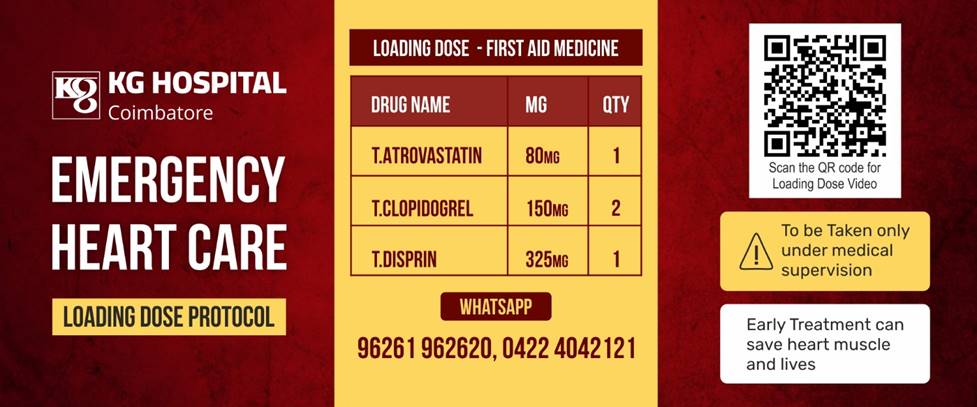
This triumvirate medical package acts like First Aid for patients initially feeling the symptoms of heart attack. KG Hospital specialists suggest that after taking these medicines, the patients should get proper medical advice on their heart condition..
KG Hospital cardiologists and cardiothoracic surgeons are available round-the-clock to provide the diagnosis and treatment to multifarious heart conditions.
Experience:
This content is based on real-world clinical observations and patient trends seen at KG Hospital, a leading healthcare institution in Coimbatore.
Expertise:
Insights are derived from qualified cardiologists and cardiothoracic surgeons with extensive experience in diagnosing and treating cardiovascular diseases.
Authority:
KG Hospital is a recognized multispecialty hospital known for advanced cardiac care, preventive health programs, and public awareness initiatives.
Trustworthiness:
The information provided is aligned with current medical understanding and emphasizes preventive care, early diagnosis, and evidence-based treatment approaches.
Frequently Asked Questions (FAQ)
1. Why are heart attacks increasing among young Indians?
Due to lifestyle changes such as stress, sedentary work, unhealthy diet, smoking, and rising diabetes and hypertension cases.
2. What are the early symptoms of a heart attack?
Chest pain, shortness of breath, sweating, nausea, pain in arm/jaw, and dizziness.
3. Can heart disease be prevented?
Yes, with regular exercise, healthy diet, stress management, avoiding smoking and alcohol, and routine health check-ups.
4. What is the role of family history in heart disease?
Genetics plays a significant role. Individuals with a family history should be more cautious and proactive.
5. What should be done during a suspected heart attack?
Immediate first aid (like the loading dose mentioned) and urgent hospital care are critical.
6. Is heart disease only a problem for older people?
No, increasing cases are seen in people aged 30–45 due to modern lifestyle factors.
 Maintaining health