
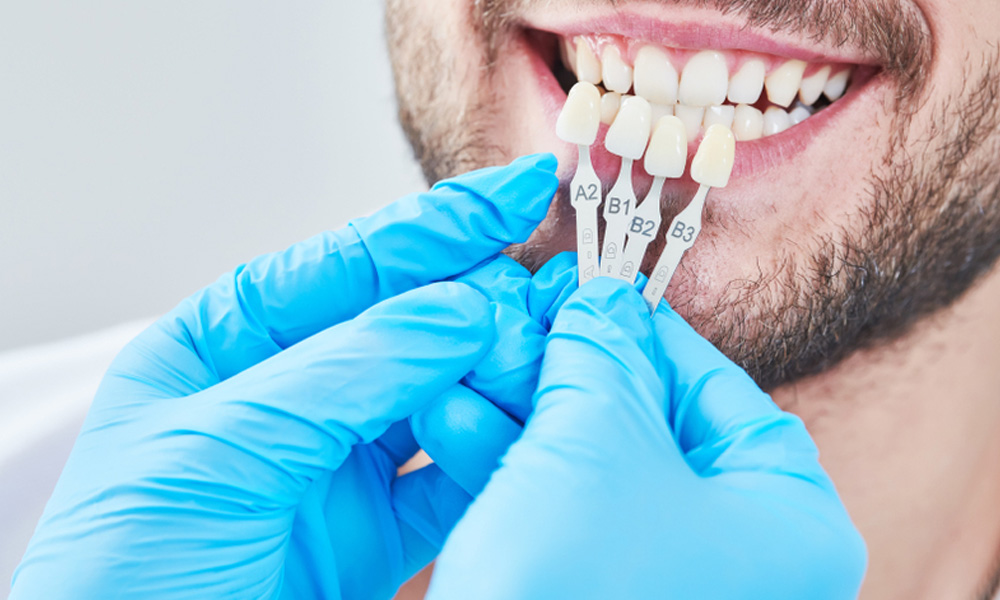
What are ceramic veneers?
Ceramic veneers are thin shells placed on the front surface of teeth to improve the appearance of a smile. They are commonly used in aesthetic dentistry to change the color, shape, length, and visual balance of teeth.
Many people choose ceramic veneers when they want to correct imperfections that cannot be solved with whitening or minor polishing. Veneers can make the smile look more even, brighter, and more harmonious while preserving a natural appearance.
Why ceramic is used for veneers
Ceramic is valued in dentistry because it combines strength, smoothness, and visual similarity to natural enamel. One of its most important qualities is the way it reflects light.
Natural teeth are not completely opaque. They have depth, softness, and slight translucency. Ceramic can reproduce these effects much better than many other materials, which is why it is often chosen for highly visible teeth.
Another important benefit is color stability. Ceramic does not stain easily and keeps its appearance for a long time with proper care.
How ceramic veneers are made
Ceramic veneers are indirect restorations. This means they are not created directly on the teeth during one visit. Instead, the dentist first takes impressions or digital scans, and then the veneers are made outside the mouth.
This method allows for a more precise fit. Accuracy is very important because the veneer should sit closely against the tooth surface. If the fit is poor, bacteria may collect near the margins, which can lead to irritation or decay over time.
The laboratory process also makes it possible to design veneers with better detail, shape, texture, and shade.
What problems ceramic veneers can correct
Ceramic veneers are used to improve a wide range of cosmetic issues. They can cover deep discoloration that does not respond well to whitening. They can also hide chips, cracks, worn enamel, and uneven edges.
In addition, veneers are often used to improve the shape of teeth. They can make teeth look longer, more symmetrical, or more proportional to the face. Small spaces between teeth can also be visually closed with veneers.
In some cases, veneers can create the impression of straighter teeth. However, they do not replace orthodontic treatment when a person has serious bite or alignment problems.
Can veneers affect facial appearance?
Teeth play an important role in the overall appearance of the lower face. As people age, teeth can wear down, become shorter, and lose their original proportions.
This wear may influence the way the lips are supported and how the lower face looks. By restoring tooth length and improving smile proportions, ceramic veneers can make the face appear fresher and more balanced.
They are not an anti-aging procedure in a medical sense, but they can noticeably improve facial aesthetics.
What happens before veneers are placed?
Before ceramic veneers are recommended, the dentist must evaluate the health of the teeth and gums. Problems such as caries, gum inflammation, heavy plaque buildup, or bite issues should be addressed first.
Healthy teeth and healthy gums are essential because veneers improve appearance, but they do not treat underlying disease. Proper planning helps ensure that the final result is not only attractive, but also stable.
At this stage, the dentist usually discusses the desired shade, shape, and overall look of the future smile.
How veneers are placed
After planning, the teeth are prepared. In many cases, a small amount of enamel is removed from the front surface. This creates space for the veneer and helps prevent the final result from looking too thick.
Then impressions or scans are taken, and the veneers are produced. When they are ready, the dentist checks their fit and appearance before bonding them to the teeth with a special dental cement.
After bonding, the veneer becomes a stable part of the visible tooth surface.
How to care for ceramic veneers
Ceramic veneers require the same basic care as natural teeth. They should be brushed gently with a soft toothbrush and a non-abrasive toothpaste. Flossing is also important because gum health remains essential.
Professional cleaning and regular dental checkups help maintain both the veneers and the natural teeth around them. Although ceramic is resistant to staining, habits such as biting hard objects or using teeth as tools should be avoided.
With proper care, ceramic veneers can remain attractive and functional for many years.
Who may not be a good candidate?
Ceramic veneers are not suitable for every situation. People with severe gum disease, major tooth destruction, or serious bite problems may need other treatment first.
In some cases, crowns, orthodontics, or restorative procedures are more appropriate. That is why a detailed dental examination is always necessary before choosing veneers.
Conclusion
Ceramic veneers are a modern solution for improving the color, shape, and overall appearance of teeth. They offer a natural look, good durability, and long-term color stability.
When planned correctly and placed under the right conditions, they can provide a significant improvement in smile aesthetics while maintaining comfort and function.
 Maintaining health