
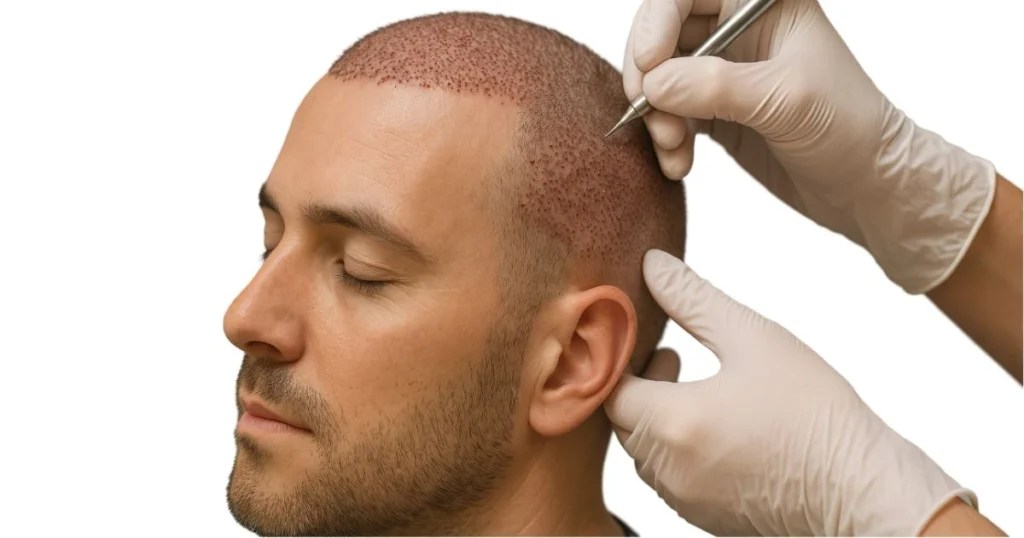
The decision to get a hair transplant treatment is rarely impulsive. Most men who reach this point have already been through the full cycle of oils, supplements, shampoos, and whatever else the internet promised would work.
By the time the search shifts to “hair transplant in delhi,” the intention is real but the questions are still louder than the answers. What does the procedure actually involve? Will it look natural or obvious? How long before things go back to normal? This guide covers the full journey so that anyone considering a FUE hair transplant knows what to expect at every stage.
Benefits of Hair Transplant Procedures
A well performed hair transplant does what no serum or therapy can replicate once hair loss has crossed a certain point. It physically relocates healthy, permanent follicles to areas where growth has stopped entirely.
- Permanent Growth The transplanted follicles come from the back and sides of the scalp, areas genetically resistant to DHT, so once they are placed, they keep growing for life.
- Natural Appearance The procedure uses the patient’s own hair, which means the colour, texture, and growth angle match the surrounding strands. Done well, nobody can tell the difference.
- Minimal Upkeep No special products, no daily applications. Transplanted hair grows, gets cut, and is washed exactly like the rest.
- Single Session Most patients achieve their coverage goals in one sitting. Follow up sessions are optional, not a requirement.
What Happens at a Hair Transplant Consultation
Walking into a hair treatment clinic in Delhi for the first time feels oddly nerve wracking for what is technically just a conversation, but a good consultation builds the foundation for every decision that follows.
Scalp Assessment: The doctor examines both the donor area and the recipient zones under magnification. The entire procedure depends on how many healthy follicles are available to redistribute, so this step determines what is realistically possible.
Diagnosis First: Not every case is ready for a transplant immediately. If the loss is still progressing, or if something like a thyroid issue or iron deficiency is fuelling it, a diagnostic first clinic will flag that before recommending surgery. Blood work and scalp scans before treatment discussions lead to better long term outcomes.
Treatment Mapping: The surgeon maps out the graft count, technique, hairline design, and expected coverage. This is where the patient sees a realistic projection of what one session achieves and whether a follow up might be needed.
FUE vs FUT: Which Technique Is Right for You?
Both techniques produce natural looking, permanent results. The difference is in how the follicles are harvested.
FUE (Follicular Unit Extraction)
- Individual follicular units extracted one at a time using a micro punch tool
- No linear scar, only tiny dots invisible even with a buzz cut
- Faster recovery, most patients resume normal activity within 5 to 7 days
- Accounts for roughly 65% of all procedures in Delhi NCR, the most popular choice among working professionals
FUT (Follicular Unit Transplantation)
- A thin strip of hair bearing skin is removed and individual units are dissected under magnification
- Leaves a faint linear scar concealed by surrounding hair
- Sutures removed at 10 to 14 days
- Allows a higher graft count in a single session, making it practical for patients needing extensive coverage at a lower per graft cost
Hair Transplant Recovery: Week by Week
The scalp heals faster than most people expect, but knowing each phase removes the guesswork.
- Day 1 to 3 Mild swelling and tenderness. Sleep slightly elevated. Avoid touching the grafts.
- Week 1 Scabs form around each graft. First gentle wash is usually guided by the clinic around day 3 to 5.
- Week 2 to 3 Scabs fall off and the transplanted hairs shed. This is shock loss, and it is completely normal. The follicle is alive beneath the surface, just resetting its cycle.
- Month 1 to 3 A quiet phase. Follicles are anchoring and building blood supply. Nothing dramatic is visible yet.
- Month 4 to 6 New growth appears. Strands may be finer initially but thicken with each cycle.
- Month 8 to 12 Density fills in. By month twelve the result is near its final form.
Hair Transplant Cost in Delhi and Gurgaon
Cost is impossible to answer with a single number because two patients in the same waiting room can need completely different graft counts, techniques, and session durations. There are many local providers like Evoke Hair Clinic who charge flat rate before examining the scalp and skipping steps that matter.
What Drives the Number
- Graft count: A Norwood 3 may need 1,500 to 2,000 grafts. A Norwood 6 could need 4,000 plus.
- Technique: FUE hair transplant costs more per graft than FUT due to the precision and time required for individual extraction.
- Surgeon expertise: AIIMS trained doctors with high graft survival rates price higher, but a 90% survival rate delivers more value than a cheaper procedure at 60%.
- Session length: Complex cases running up to 8 hours require more resources and a larger clinical team.
Why Delhi For Hair Transplant Treatment?
India handles 80 to 90 percent of all global hair transplant surgeries, and Delhi sits right at the top of that volume. The same calibre of surgeons, the same equipment, and comparable graft survival rates cost a fraction of what patients pay in the UK, USA, or Australia.
That gap comes from lower operational costs and a fiercely competitive market, not from any compromise in quality. It is also why hair transplant treatment in Delhi draws an increasing number of international patients every year.

 Maintaining health