
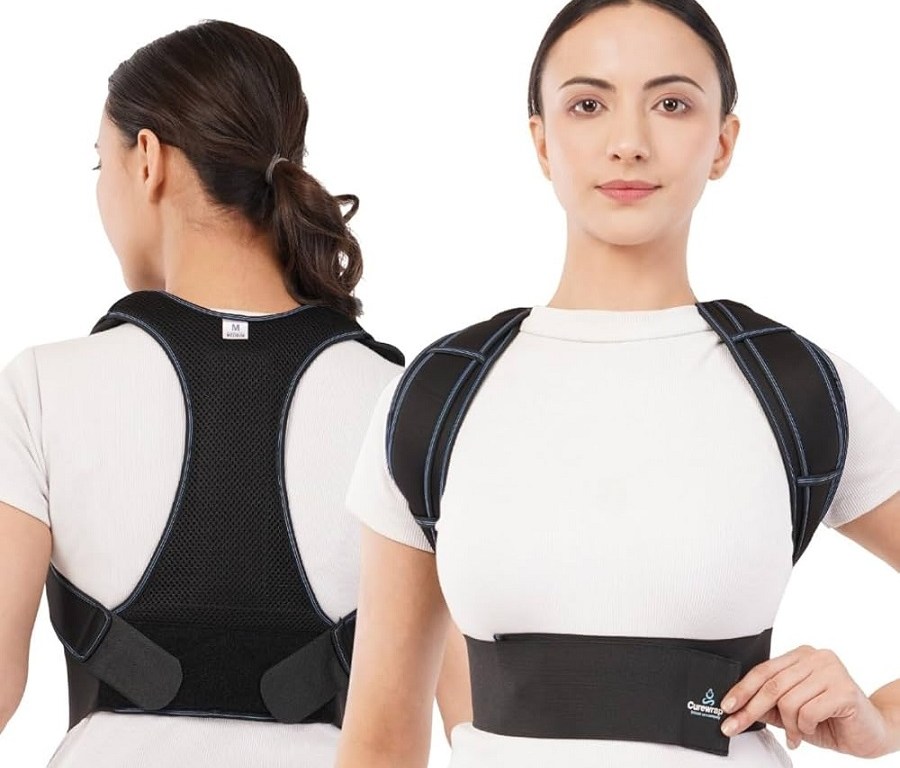
Take a moment to think about how much time you spend sitting during the day. From working on a computer to attending online meetings or scrolling through your phone, these habits can keep you leaning forward for hours.
As time passes, this may cause your shoulders to round and your neck to shift out of alignment. You may start noticing stiffness in your upper back or a constant urge to stretch and straighten your posture. These small discomforts are quite common in today’s work and lifestyle routines. That is when most people turn to a posture corrector belt.
Let’s take a closer look at some common signs that show your body requires additional support for posture correction.
How Long Hours at Your Desk Affect Your Body
Our bodies adapt easily to the way we sit and move every day. When we spend long hours leaning forward, like when working on a laptop or using a phone, our chest muscles can become tight while the muscles in the upper back gradually weaken. Gradually, this makes slouching feel more natural than sitting or standing upright.
A body posture belt can help by gently reminding you to straighten your back, pull your shoulders back, and engage your core. With constant use and mindful posture practices, it encourages your body to stay properly aligned throughout the day.
Common Signs Your Posture Needs Correction
Below are 5 signs that can help you to determine if your body requires a posture corrector.
1. Chronic Tension Headaches
Believe it or not, the root cause of many headaches isn’t stress; it’s your neck. When your head juts forward, the muscles at the base of your skull have to work overtime to keep your head from falling. This creates significant strain that radiates upward. When you experience recurring headaches that seem to settle behind your eyes or at the base of your skull, a posture belt can help ease that forward-head tension.
2. That Persistent Nagging Back Pain
Back discomfort that keeps coming back can often be linked to poor posture. Slouching places extra pressure on the muscles that support your spine, causing them to tire more quickly. As a result, you may feel a steady ache in your upper or lower back. A posture corrector belt can help improve alignment and support your body throughout daily activities.
3. Shoulders that Roll Forward
Stand in front of a mirror and allow yourself to relax. Do your shoulders sit naturally, or do they curve toward your chest? If they roll forward, you are likely shortening your pectoral muscles and overstretching your rhomboids (the muscles between your shoulder blades). Wearing a posture correction belt for short, consistent routines can help open up the chest and pull those shoulders back into a healthier anatomical position.
4. Shallow Breathing
Your lungs require space to take full breaths, but slouching can make that harder. When your chest is compressed, breathing deeply becomes a challenge. Also, this can make you feel tired or low on energy. Using a posture belt can help you sit straight and open your chest, as well as breathe more comfortably.
5. Visible Dowager’s Hump or Rounded Shoulders
If your shoulders look rounded or your neck curves forward in pictures, it may indicate structural changes in your posture. Although it’s not a permanent fix, a posture corrector belt serves as a preventive aid. It can help guide your shoulders back and encourage proper alignment. While supporting your back and shoulders, it can slow or stop the progression of poor posture before it leads to more serious spinal issues.
How to Use a Posture Belt Effectively
It’s a common myth that you need to wear a posture belt for eight hours nonstop. However, overuse can cause your muscles to rely on it and lose strength, which is exactly what you want to avoid.
Pro tips for best results:
- The 30-Minute Rule: Start by wearing it for 30–60 minutes at a time while you are working at your desk or doing light tasks.
- Active Engagement: Treat the belt as a signal. Each time the straps press against your shoulders, simply pull them back and engage your core for support.
- Pair with Exercises: A belt is only an aid, not a complete solution on its own. Pair it with exercises like chin tucks, wall angels, and bird-dogs to build the natural muscle strength necessary to keep a safe posture on your own.
Choosing the Right Support
When choosing a posture corrector, focus on comfort and adjustability. Search for breathable and hypoallergenic materials to prevent skin irritation. Also, make sure the straps are easy to keep the belt both comfortable and effective. A comfortable belt makes it easier to use on a regular basis, whether you wear it over or under your clothes. Above all, a proper fit will help you get the most out of the posture belt.
Final Thought
Enhancing your posture isn’t about being flawless; it’s about developing greater awareness of your body throughout daily activities. Whether you are addressing persistent tension or simply want to improve your breathing capacity, a body posture belt can offer the necessary support to realign your shoulders and spine.
Its main purpose is to function as a temporary guide instead of being a long-term aid. Also, as you build strength and muscle memory, you will find that you rely on the belt less and less, leaving you with a self-assured, upright posture.
Frequently Asked Questions
1. Can I sleep while wearing a posture corrector?
It is generally not recommended to wear a posture belt while sleeping. Your body needs to relax and move naturally during rest to recover. Additionally, laying on the straps or buckles can cause skin irritation or restrict blood flow. Focus on using it during your active hours when you are most likely to slouch.
2. Will a posture belt weaken my muscles over time?
If used incorrectly (e.g., wearing it for 8+ hours a day), yes, your muscles might become lazy and rely on the belt. This is why we recommend the 30-60 minute rule. The goal is to use the belt as a trainer to build muscle memory, not as a permanent crutch.
3. How long does it take to see permanent results?
Consistency is key. Most users notice an improvement in their awareness within 2 to 4 weeks. However, physical changes in your resting posture usually take 2 to 3 months of combined belt use and targeted strengthening exercises like planks or rows.
 Maintaining health