
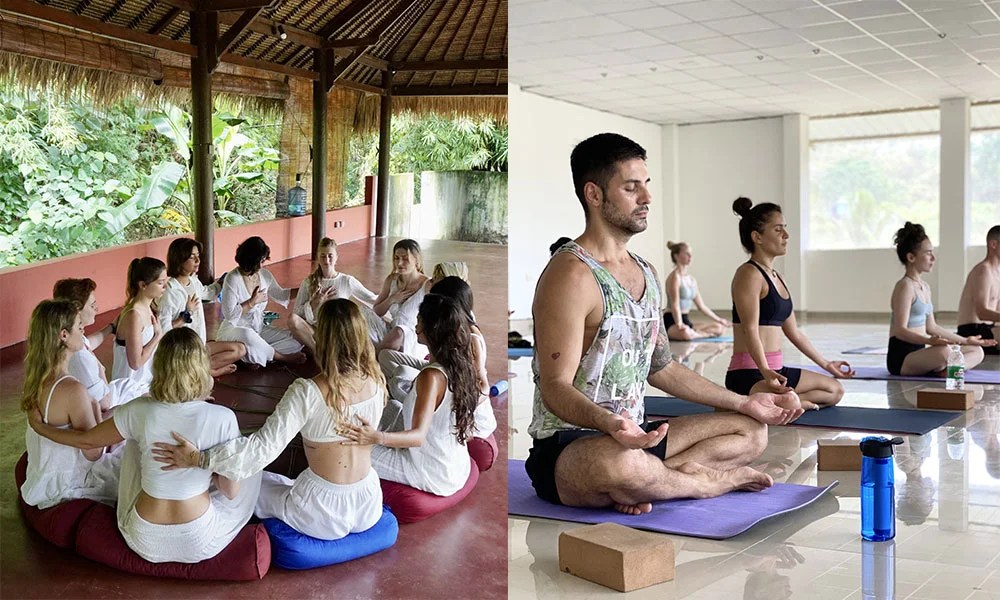
Where a student completes their certification leaves a mark that outlasts the qualification. The setting, the daily pace, and the cultural environment each contribute something to learning that no syllabus accounts for. Yoga Teacher Training across these two destinations adheres to internationally recognized standards. The program brings in instructors with substantial teaching backgrounds and places students in environments that add to the experience. What separates the two has nothing to do with the quality of instruction. It has everything to do with the kind of world a student steps into each morning before class begins.
Thailand’s training culture
Thailand’s credibility in the yoga certification space has been built over decades of hosting students from all over the world. Programs concentrated in the northern regions and coastal retreat corridors run on organized schedules with clear daily progression through philosophy, anatomy, and asana. Students who arrive with the intention of working with sustained focus find the format suited to how they learn.
What sits outside the training room carries weight here, too? Temple life is not a tourist feature but an active part of daily community culture. Monastic traditions and meditative practices operate in plain sight, giving yoga philosophy the cultural context that classroom instruction alone cannot provide. Students drawn to the contemplative setting during their studies find that Thailand meets that need better than alternatives. Schools time their programs around regional weather, keeping solid options open across most of the calendar year.
Bali’s immersive environment
More than two decades of growth have established Bali as one of the most developed yoga education environments in the world. Training programs are distributed across several regions, from quieter inland areas framed by rice fields and volcanic terrain to busier coastal zones carrying dense international communities already deep into their own practice. Specific qualities this island brings to the training experience:
- A Hindu spiritual tradition practiced publicly and daily across local community life, placing yoga philosophy inside an observable cultural reality rather than limiting it to classroom theory.
- Natural environments across farmland, forest, and coastline that provide the kind of physical surroundings that support the reflection an intensive certification period asks of students.
- An existing international practitioner community means students arrive in a functioning network rather than spending the program building one from scratch.
- Program variety spans Hatha, Vinyasa, Yin, and Ashtanga styles through schools that have spent years developing their curriculum through direct student feedback.
The atmosphere in Bali is more energetic than most students find in Thailand. Wellness is not a niche pursuit on the island but something embedded into the surrounding environment. Gatherings, practitioner spaces, and community events form a backdrop that students move through daily without having to seek them out.
Choosing your setting
Better-qualified graduates do not come from one destination over another. Both produce teachers who lead classes with confidence and knowledge. The real question is which surrounding environment gives a specific student the conditions they need to stay fully engaged across an intensive period of physical, intellectual, and philosophical study. Students who thrive on structure, value a schedule that runs with discipline, and want a cultural atmosphere that encourages turning inward find that Thailand aligns with how they work best. This setting rewards sustained concentration particularly well for certain temperaments. When students arrive in Bali, they feel genuinely at home, are drawn to the community, and want wellness embedded into their daily life.
 Maintaining health