
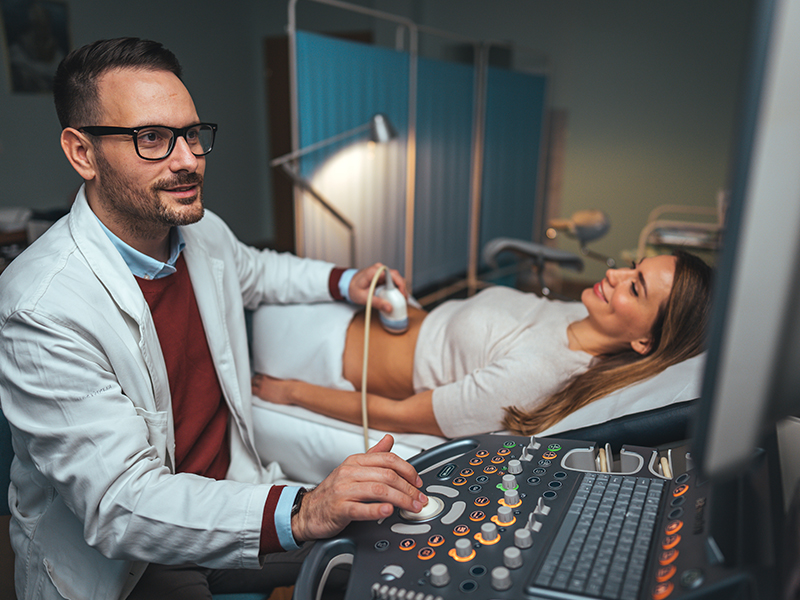
An ultrasound scan is a non-invasive imaging technique to generate real-time images of organs and tissues inside the body. It uses high-frequency sound waves to create the images. Unlike x-rays, ultrasounds are radiation-free and painless, making them suitable for visualising dynamic processes like the beating of the heart and blood flowing through blood vessels. Ultrasound probes use transducer (a handheld device), which produces sound waves that have frequencies above the threshold of human hearing (above 20KHz). In the case of diagnostic ultrasound, probes are placed on the skin, however, in some cases, probes may be placed inside the body like vagina, the gastrointestinal tract, etc. Ultrasound scans are commonly used to examine the heart, kidneys, thyroid, gallbladder, and female reproductive system.
If you live in Delhi-NCR, you can do an online search with keywords ultrasound near me to know the best diagnostic centres in your vicinity.
How it works and preparation
The preparation for an ultrasound will depend on the type of scan. For instance, six to eight hours of fasting is needed before the scan to examine the abdomen. This allows clear visualisation of organs such as the pancreas, spleen, liver, and gallbladder. For a pelvic ultrasound, your bladder needs to be full to evaluate reproductive organs or early pregnancy.
There is no special preparation required for scans like thyroid, breast, musculoskeletal, or vascular ultrasounds. Patients are advised to come to the examination room without applying lotions, creams, or powders on the area to be examined, as it may interfere with the examination process. Wearing loose and comfortable clothing is advised.
For imaging purposes, a water-based gel is applied to the skin/mucosa surface of the body to facilitate transmission of ultrasound waves, given that sound waves do not transmit well in air. Each transducer also has a marker located at the head of the transducer in order to help identify its orientation. Transducers are produced in an array of shapes, sizes and frequencies and are adapted for specific clinical applications.
To find a trusted diagnostic centre, patients may search with keywords sonography centre near me to ensure quick access to essential diagnostic tests.
Types of ultrasound
Different types of ultrasounds are available depending on the part of the body being scanned such as abdominal, pelvic, and breast ultrasounds.
Diagnostic ultrasound
This type of ultrasound helps clinicians visualise images of internal organs and tissues within the body. This is largely done to view whether the organs are functioning properly or not.
Below are some of the commonly performed diagnostic ultrasounds:
Renal ultrasound: This scan helps visualise renal tumours and determine the effect of high blood pressure on the kidneys. It is also useful in evaluating kidney stones and related complications.
Abdominal ultrasound: This scan evaluates organs such as the liver, gallbladder and bile ducts, pancreas, spleen, and major blood vessels, present in the abdominal area. It is used in assessing liver diseases, gallstones, and can support the diagnosis of acute appendicitis when combined with other tests.
Breast ultrasound: It helps evaluate possible abnormalities in the breast. It is often recommended along with mammography for breast cancer screening.
Pelvic ultrasound: It examines pelvic organs in men, such as the prostate, and in women, visualises the uterus, fallopian tubes, and ovaries. It helps evaluate bladder-related changes and to detect tumours.
Thyroid Ultrasound: It helps assess the thyroid gland in the neck. This scan is often recommended when there is an imbalance in hormone production.
Bladder Ultrasound: It examines the bladder to find out benign or malignant tumours, and urinary calculi.
Cardiac Ultrasound: It is also called an echocardiogram and is usually done to visualise the structures of the heart, includin heart valves, cardiac chambers, and major cardiac vessels. It is mainly done to evaluate the function, contraction and blood flow to the heart. It is useful in diagnosing valvular diseases, cardiomyopathy, heart failure and aortic disorders.
To locate the best diagnostic centre, search with keywords sonography near me.
Disclaimer: For personalised advice and further information, always consult your doctor or qualified healthcare professional.
 Maintaining health