
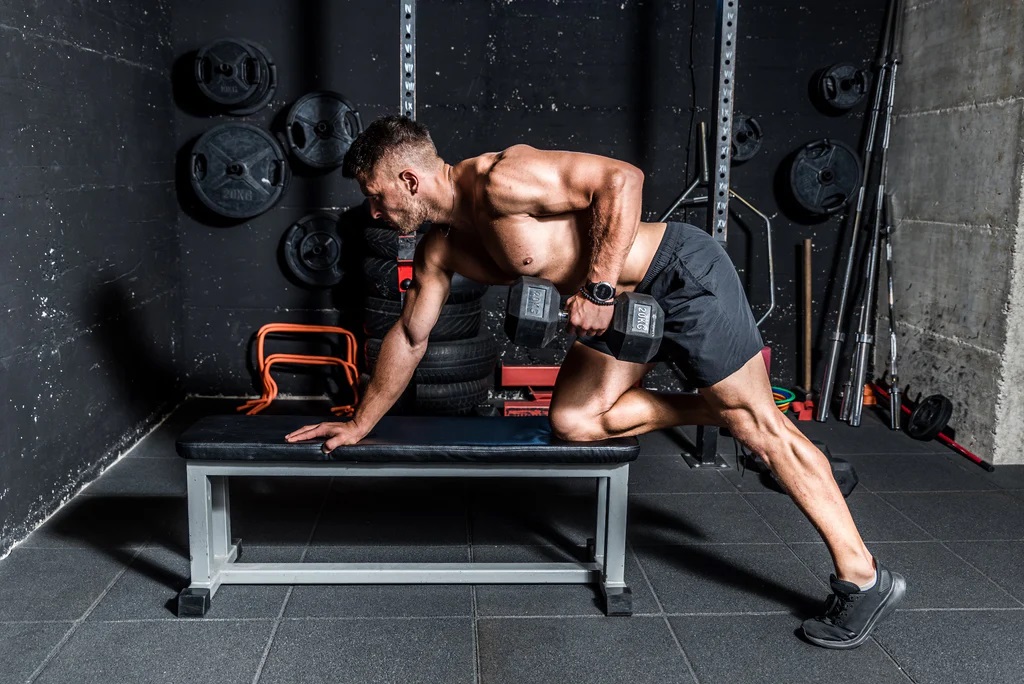
A typical fitness goal is to have a contoured upper body, and dumbbells provide a flexible way to get there. Frequently disregarded in favor of barbells and machines, dumbbells can produce remarkable results by efficiently targeting the back and chest muscles. A comprehensive dumbbell-only workout that can be modified for all skill levels is provided in this tutorial. This practice will help you gain strength and definition, regardless of your level of experience with lifting weights. We’ll go over key movements, form, and progressive overload strategies, giving you a framework for building a strong, toned upper body with just dumbbells. Get ready to reach your full potential and see noticeable gains with this simple yet efficient workout.
Understanding the Benefits of Dumbbell Training
Compared to other training techniques, dumbbells have special benefits. They engage smaller, frequently overlooked muscles and encourage higher muscular activation since they need more stabilization. A wider range of motion is made possible with dumbbells, which may enhance flexibility and muscle growth. Additionally, because each side of the body functions independently, they can aid in correcting muscular imbalances. Because of this, dumbbell training is a great choice for people of all fitness levels.
The Essential Exercises for Chest and Back
All of the main muscle groups in the chest and back should be worked during a well-rounded dumbbell workout. The dumbbell flyes, dumbbell bench press, and incline dumbbell press are good exercises for the chest. These workouts promote overall development by working the pectoral muscles from various angles. Use dumbbell pullovers, dumbbell rows, and reverse dumbbell flyes for the back. By focusing on the lats, rhomboids, and trapezius muscles, these exercises help build a toned and powerful back.
Workout Structure for Advanced Lifters
By using larger weights, cutting down on rest periods, and utilizing more complex tactics like drop sets or supersets, expert lifters can enhance the intensity. For expert lifters, a suggested training plan can include using heavier weights that challenge them in 3–4 sets of 8–12 repetitions for each exercise. Between sets, there should be shorter rest intervals of 45 to 60 seconds. To increase muscular fatigue, try adding drop sets, which involve lowering the weight after reaching failure, or supersets, which combine a chest and a back exercise.
Conclusion
It’s important to speak with a medical expert or trained personal trainer before beginning any new exercise regimen. In order to avoid injuries and encourage recovery, proper warm-up and cool-down techniques are crucial. Throughout each exercise, keep in mind to concentrate on using the target muscles and keeping proper form. Pay attention to your body and change the intensity or weight as necessary. Regardless of your level of fitness, you may develop a stronger, more defined upper body by regularly performing a well-structured dumbbell chest and back workout.
 Maintaining health