
Heart is one of the vital organs in humans. The heart works all day and night without stops to pump the blood throughout the body. Do you know that the blood vessels are 100 000 kilometres in length? Just imagine the heart pumps all the blood along these blood vessels. This is why it is important to take care of heart health so that the heart can work efficiently and hopefully till the end of a person’s time in old age. There are many heart diseases that can affect the heart functionality. In this DoctorOnCall’s article, we will be learning about one of the many heart diseases known as aortopathy, focusing on bicuspid aortopathy.
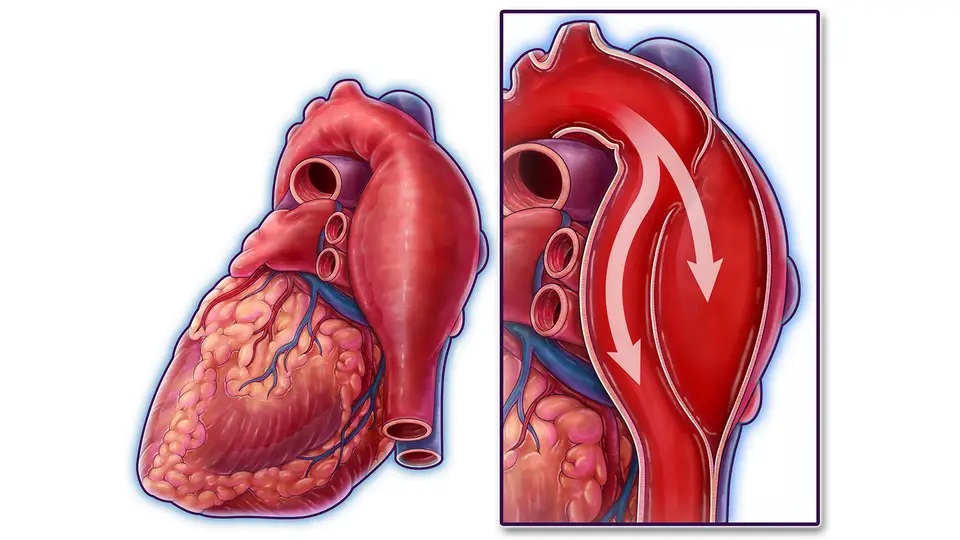
Aortopathy is a type of heart disease that affects the aorta. Aorta is the biggest blood vessel that carries oxygen-rich blood to vital organs and throughout the body. Aortopathy causes the blood flow to become limited or decreased due to the weakened aortic wall and/or tear to the aorta. When left untreated, it can result in serious and even life-threatening diseases.
Aortopathy is characterised by a group of aortic conditions. Thus, there are several types of aortopathy with varying types. One of the common types is bicuspid aortopathy. To understand more of this, you may want to know the normal aortic valve. Most normal people have an aortic valve with 3 leaflets. Although, there are cases when the aortic valve is present as two leaflets as this is known as bicuspid aortic valve. This causes abnormalities of the aortic valve either leaking or narrowing of the valve or enlargement of the ascending aorta.
Bicuspid aortic valve is known to significantly increase risk for catastrophic events. Patient with bicuspid aortic valve are known to have increased risk for aortic dissection (a tear in to the inner layer of the aorta and usually serious condition).Bicuspid aortic valve is one of the most reported congenital heart defect affecting 1 to 2% of the population. Potential risk factors for this condition is valve morphology, aortic stenosis (narrowing aortic valve) and aortic insufficiency (reversed blood flow from aorta into the left ventricle of the heart).
One of the causes leading to bicuspid aortic valves is mutation in genes. Most common genes associated with development of bicuspid aortic valves are mutations in the NOTCH1 gene. NOTCH1 genes are responsible for heart development and mutation in this gene can cause several congenital disorders involving malformed valves, the aortic arch and defective chamber septation. Another cause believed is the hemodynamic theory where the abnormal stress by the blood pressure on the aortic wall. The exact causes are still debatable.
There are 3 types of bicuspid aortic valve:
1) Fused type- the most common type, accounting for 90 to 95% of bicuspid aortic valves. It is characterised by 2 of 3 cusps appearing fused within the 3 distinguishable sinuses of Valsalva (an anatomic space at the aortic root).
2) Two-sinus type- uncommon type as it is responsible for 5 to 7% of bicuspid aortic valve, with 2 cusps of roughly equal size within the two sinuses of Valsalva.
3) Partial-fusion type- recently recognised and appeared similar to typical tricuspid valve with less than 50% fusion between the 2 cusps at the commissural base forming a mini-raphe. The term ‘raphe’ defines the conjoined area of the 2 underdeveloped flaps (leaflets) turning into a malformed commissure between both leaflets.
To diagnose aortopathy, including bicuspid aortopathy associated with bicuspid aortic valves, imaging tests are needed. Imaging tests, specifically CT and MRI scan can provide details of the anatomy involved in aortopathy. This is because details are unique to every patient. Once diagnosis is established, the patient may or may not be offered treatment.
Treatment will depend on the symptoms and if treatment does provide great benefits in the long run. Surgery is the common treatment to help patients achieve better outcomes. Surgery can be in the form of open surgery, total endovascular or hybrid aortic procedures. The choices of surgery will heavily depend on the patient status. Majority of patients with bicuspid aortic valves have surgery to repair or replace the bicuspid valve.
Bicuspid aortopathy is associated with poor clinical outcomes. Compared toa normal trileaflet aortic valve, complications of the bicuspid aortic valve itself are more common. It is a progressive disease and its presence increases the risk for unfavourable events such as aortic rupture or dissection. These two conditions are considered as life-threatening emergencies. Patients with aortic regurgitation and isolated root dilatation may be at higher risk for aortic event compared to other kinds of aortopathy.
Most people with bicuspid aortic valves have a healthy normal life and normal life expectancy. However, this is only achievable with proper treatment and continuous follow up. When left untreated, a bicuspid aortic valve can lead to serious complications such as heart failure. Having risk factors such as high levels of cholesterol and a bad lifestyle such as smoking can speed up this process.
 Maintaining health