
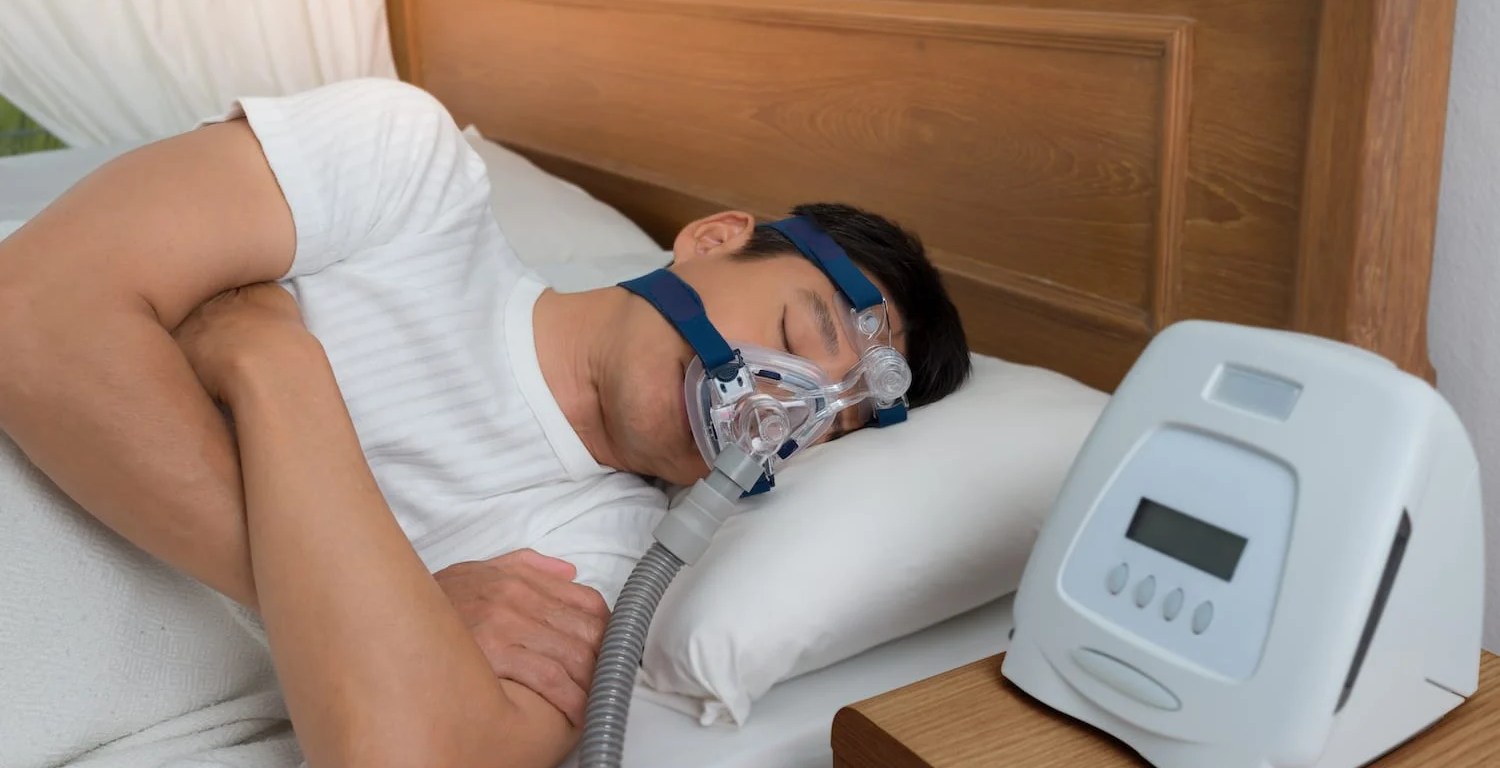
If you are unfamiliar with sleep apnea treatment, you may be unsure of where to start. What precisely are the numerous machines? What similarities and distinctions do they share? Eventually, you begin to ponder which option is best for you.
CPAP, BiPAP, and APAP machines are the three types of equipment used to treat sleep apnea. In this post, we have categorised each kind of sleep apnea so that you may collaborate with your physician to find the most effective therapy for your condition.
What Is Sleep Apnea?
Sleep apnea is a sleep disorder that causes individuals to cease breathing while sleeping. A person with sleep apnea may gasp during their sleep, and this is because of an abrupt pause in breathing. Gasping is just an early symptom of a person who is suffering from apnea or obstructive sleep apnea (OSA), which is the more frequent type of sleep apnea.
When the muscles that hold the soft tissues in your throat, such as your soft palate and tongue, relax momentarily, obstructive sleep apnea develops. When such muscles relax, your airway becomes limited or blocked, causing you to temporarily cease breathing.
Differentiate The Devices
The three primary kinds of machines used to treat sleep apnea are as follows. To help you in deciding which device to use, we have distinguished the three by providing an explanation of what and how each device is used for, as well as if it is the best gadget for you and what you are going through.
APAP
An automatic positive airway pressure (APAP) machine, or sometimes even called auto-titrating, adjusts the amount of positive airway pressure in response to shifts in airflow. On a breath-by-breath basis, this gadget automatically adjusts during the night to meet your particular pressure demands. This improves the comfort of APAP machines.
When To Use APAP
APAP machines make use of software to automatically adjust how much air you need when you get a good night’s sleep.
The APAP machine only slightly raises pressure when you have Obstructive sleep apnea in order to restore regular breathing. While you are asleep, the machine’s air pressure changes as necessary to maintain an open airway. Because APAP machines utilise software, you can rest assured that they are always correct, unlike earlier versions and devices used to treat sleep problems in the past.
CPAP
The continuous positive airway pressure, most often known as CPAP machine, is a commonly prescribed machine by doctors for people undergoing sleep apnea. It is also the most uncomplicated method and is studied by professionals for the treatment of sleep apnea.
CPAP works by maintaining a constant pressure throughout intake and expiration. Unlike APAP, which varies the pressure depending on your inhalation, CPAP maintains a constant pressure while you sleep.
When To Use CPAP
When you breathe in and out while using CPAP, the pressure is constant and consistent. While you are asleep, CPAP offers a constant pressure rate as opposed to APAP, which modifies the pressure according to your inhalation.
Sometimes, even as you are trying to breathe, the pressure may still be applied, giving you the impression that you are choking while sleeping. Lowering the pressure rate is one solution for this. Then, your doctor might suggest either an APAP or BiPAP machine if this doesn’t help you with your condition.
BiPAP
Bilevel positive airway pressure (BiPAP) describes the use of two different levels of pressure to maintain an open airway. A BiPAP machine provides two pressure settings, one for exhalation and one for inhalation. BiPAP devices make it easier for those with severe OSA to breathe in and out.
When To Use BiPAP
Like the other two mentioned devices, CPAP and APAP machines, BiPAP is used for treatment by providing air using a tube into a mask that covers the nose.
Unlike CPAP, BiPAP delivers an inhale and exhale pressure that is called the inhalation positive airway pressure (IPAP) and an exhalation positive airway pressure (EPAP), while CPAP only has a single pressure.
If you are looking for a device that will give you moderate to high pressure, the BiPAP machine is what you are looking for and will most probably be prescribed by your doctor. Though, like the CPAP and APAP machines, BiPAP machines have low-range pressure zones but can cater to a higher pressure, as said previously.
What Is Best?
Knowing the best treatment plan or device for you on the first try may be easy and hard for some people. When you feel like what you purchased has not been working and making a difference in your sleep, you can get advice from your doctor to move on to other devices.
If you have tried changing your lifestyle and using other machines, your doctor may advise you to have surgery to help you not depend on machines to breathe.
Conclusion
The noninvasive positive airway pressure devices CPAP, BiPAP, and APAP machines may all be recommended for the treatment of sleep apnea. Using air pressure to clear a clogged upper airway so that air may move freely in and out of the lungs during sleep is the objective of both treatments.
In addition to positive airway pressure treatment, it is essential to adhere to your doctor’s recommendations for any lifestyle adjustments. All varieties of sleep apnea may be life-threatening. Therefore, treating it immediately can considerably improve your attitude and quality of life overall.
 Maintaining health