
Introduction
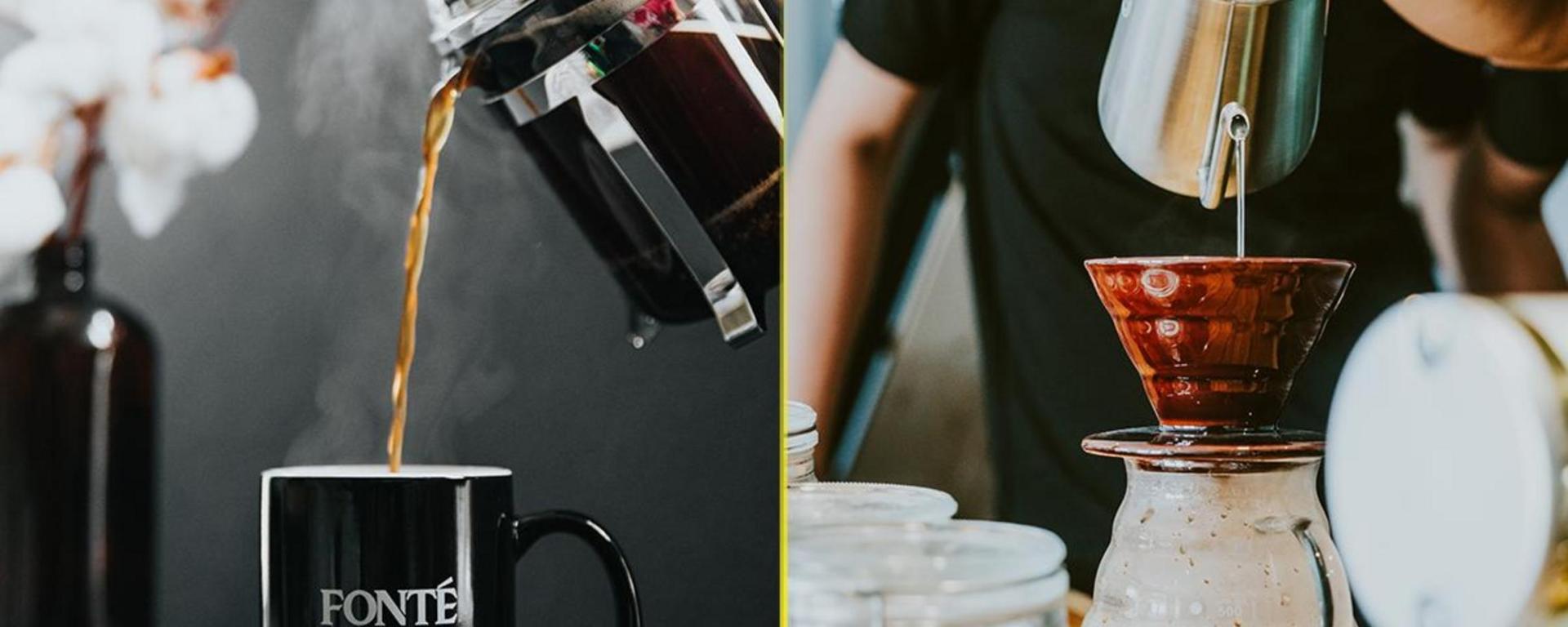
According to Matt Davies Stockton, the debate on the best coffee brewing method has been going on for years. With the rising popularity and convenience of pour-over coffee and French coffee, people have been taking sides and advocating for their respective camps. Let’s check out which one is better.
The Considerations
1. Difficulty – French press is one of the easiest and most convenient coffee brewing methods. It has three components. A cylindrical glass, with an open top, a filter, and a plunger. If you’re new to manual brewing, you’ll find the French press method to be easier than the rest. Fill up the cylinder with coffee grounds, add hot water and allow for the coffee to steep before you plunge down the filter.
On the other hand, pour-over coffee is a bit more technical. Not difficult, just a bit more technical. Place the grounds in a cone-shaped component, add hot water evenly from the top and allow the grounds to get wet. Wait a bit and add water again in a circular motion. Finally, the coffee-soaked water makes its way through the filter into the cup. However, it requires strict control of temperature, coffee ground distribution, and pouring technique.
2. Brew time – When it comes to brewing time, both French press and pour-over coffee are similar with a margin of 1 or 2 minutes. So, there’s little to no difference here. On the other hand, you have the advantage of making cold brews in a French press.
You leave the coffee grounds with cold water in the French press for more than 12 hours inside the fridge and plunge it down for a cup of cold brew. That’s simply not possible with pour-over coffee and most other methods of brewing.
3. Flavor and texture – With the French press, you use two or three layers of circular mesh filters to separate the coffee grounds from the steeped brew. On the other hand, with pour-over coffee, you use a much finer paper or fabric filter.
So, tiny particles of coffee grounds don’t get into the brew with pour-over coffee and most of the natural coffee oils don’t make their way through either. That results in a smoother and lighter brew with the pour-over method. The French pressed brew would be stronger and bolder with a fuller body. French press coffee would also be grittier than pour-over coffee.
4. Cleaning – With pour-over coffee, the grounds, coffee oils, and everything is collected in the filter. So, cleaning is as simple as throwing away the filter. With the French press, you need to unscrew the filters and clean out the grounds from the glass cylinder.
Conclusion
Matt Davies Stockton suggests you try both coffee brewing methods to understand which one you like more. When it comes to the war between French press coffee and pour-over coffee, it’s fun at best and stupid at worst. At the end of the day, it all boils down to your preference and there is no superior brewing method. Both have their advantages and disadvantages, and no one should bring out their pitchfork if they like one over the other.
 Maintaining health